
Wire Seals in Modern Security Applications: Why Flexibility Matters More Than Ever
Posted by Steve Diebold
Security challenges rarely follow a single pattern. Across utilities, logistics, industrial equipment, and high-value assets, sealing requirements vary widely depending on access points, environments, and inspection processes. As a result, organizations need sealing solutions that can adapt rather than force standardization onto inconsistent applications.
Wire seals have become one of the most versatile tools in tamper evident security because they are not limited to fixed sizes or rigid configurations. Their ability to adapt to various openings, lengths, and locking conditions makes them a practical solution across industries where both flexibility and reliability are equally important.
Where Fixed-Length Seals Fall Short in Real-World Applications
Many traditional seal types are designed for consistency rather than variability. Fixed-length plastic seals or rigid locking mechanisms often work well in controlled environments, yet they become limiting when applied to real-world conditions where access points differ from one asset to another.
In applications such as utility meters, valves, drums, ATM cash boxes, and inspection equipment, sealing requirements can change dramatically. Some openings are extremely small, while others require extended reach across multiple locking points. In these situations, a seal that cannot adapt in length or threading path creates inefficiencies or forces teams to carry multiple seal types. Reviewing the guide to tamper evident security seals can help highlight how application-specific many traditional options are.
Wire seals address this limitation by offering a flexible threading system that can pass through single or multiple openings, cover short or long distances, and accommodate both simple and complex configurations without requiring multiple seal variations.
Why Wire Seals Fit a Wider Range of Use Cases
The defining advantage of wire seals is their adaptability. Unlike rigid seals, wire-based systems can be adjusted to fit the exact requirements of each application, making them suitable for both small precision sealing points and large-scale industrial setups.
Wire seals can:
- Thread through openings under a millimeter or span several feet
- Secure single access points or multiple handles in a sequence
- Adapt to irregular shapes or configurations
- Reduce the need for multiple seal types in inventory
This flexibility becomes especially valuable in scenarios where multiple components must be secured together. For example, sealing a series of valves or grouped equipment can often be done with a single wire seal rather than multiple individual seals, improving both efficiency and cost control.
For organizations evaluating scalable sealing strategies, exploring the full range of wire security seals provides a clearer view of how adaptable these systems can be across different industries.
A Broader Range of Wire Seal Designs for Different Security Needs
Not all wire seals function the same way, and choosing the right design depends on how the seal will be installed, inspected, and maintained over time. AC&M manufactures a wide range of wire seal variations to support these different requirements.
Available options include:
- Lead and wire seals that crimp closed with a press
- Steel snap-lock seals that require no tools
- Aluminum crimp seals for lightweight durability
- Plastic-bodied seals with internal metal locking mechanisms
Each design offers a different balance of strength, usability, and installation method. Supporting tools, such as precision crimping equipment, further ensure consistent application in field environments where accuracy matters.
Understanding the differences between these formats is key to building an effective sealing program, especially when transitioning from legacy systems to more modern alternatives. For a deeper look at how wire seals have evolved across industries like weighing and metering, the history and usage of wire seals offers valuable context.
Two Specialized Wire Seal Solutions Built for Performance
Some applications require more than just flexibility. They demand enhanced tamper resistance, durability, and ease of use in the field. AC&M has developed specialized solutions to meet these needs.
Cup Seals for High-Security Coverage: Cup seals provide a unique approach, serving as both a wire seal and a protective cover for screws or bolts. Their 360-degree multi-locking design creates a strong barrier against tampering, making them one of the more robust indicative seal options available. They are also available in small and large diameters to accommodate a wide range of screw and bolt sizes.
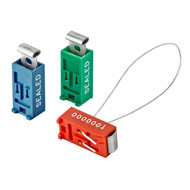
PSW-97 Wire Seal for Field Efficiency: The PSW-97 combines a plastic body with a stainless steel locking plunger that snaps securely into place without tools. Originally designed for utility meter applications, it performs reliably in outdoor environments and supports long-term installations. Its ease of use and durability make it a strong choice for teams that require both speed and consistency in the field.
These specialized designs demonstrate how wire seals can be engineered beyond basic functionality to meet more demanding operational requirements.
Choosing the Right Wire Material for Each Environment
Wire selection plays a critical role in overall seal performance. Different environments require different material properties, and using the wrong type of wire can reduce effectiveness or create safety concerns, especially when working with tamper evident seals that rely on proper fit and durability to maintain security integrity.
Common wire options include:
- Galvanized steel wire for general outdoor use with corrosion resistance
- Stainless steel wire for high-humidity or chemically exposed environments
- Copper wire for flexibility and ease of installation in tight spaces
Each material supports different operational needs, and many sealing programs benefit from maintaining a mix of wire types. Exploring the full selection of wire seals and wires can help organizations align material selection with application requirements.
Applications That Benefit Most from Wire Seal Flexibility
Wire seals are used across a wide range of industries because of their ability to adapt to different configurations and requirements. For instance, refillable pesticide containers rely on wire seals to meet EPA tamper-evidence requirements, while water and gas meters use them as a first line of defense against unauthorized access.
Common applications include:
- Utility meters and service connections
- Valves, tanks, and industrial controls
- ATM cash boxes and secure containers
- Inspection points for equipment and instruments
- Transportation and logistics sealing
Their ability to secure multiple components, adjust to varying distances, and provide clear tamper evidence makes them particularly valuable in environments where standard seals are too restrictive.
Strengthening Security with Flexible Sealing Solutions
Wire seals continue to stand out as one of the most adaptable and reliable solutions in tamper evident security. Their ability to adjust to different applications, support multiple materials, and simplify complex sealing requirements makes them an essential part of modern security programs.
With a broad range of designs, material options, and specialized solutions like the PSW-97 and cup seals, American Casting and Manufacturing provides the flexibility organizations need to build more efficient and consistent sealing strategies. For those looking to strengthen their approach, exploring the full catalog of wire security seals at seals.com is a practical next step toward more effective protection.