
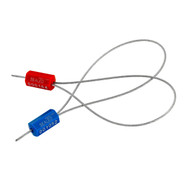
Tamper Evident Seals: Built for Dairy & Tanker Security
Posted by Steve Diebold
Tamper evident seals support dairy and tanker operations by providing visible proof if a valve, hatch, or closure has been opened, tampered with, or accessed without authorization. A tamper evident seal is a device that shows clear physical evidence, such as a broken lock body, torn label, or cut wire, whenever someone attempts to remove or bypass it.
In the dairy industry specifically, tanker fleets and processors rely on these seals not just for security, but also for tracking routes, batches, and inspection records tied to each load. Getting the seal type and process right up front helps operations avoid gaps in both security and documentation.
Tamper Evident Seals Have Long Been a Standard in Dairy Industry Security
Tamper evident seals have been used in dairy operations for years, in many cases before government agencies formalized food safety protocols that now require similar measures. Tanker fleets, milk processors, and tank wash facilities use these seals to confirm that a tank, valve, or hatch has not been opened between inspection points.
AC&M produces plastic pull-up seals designed to fit valves, hatches, and closures on trucks, gates, and control boxes. Metal seals are also available for applications where plastic does not offer enough strength, such as high-traffic tank wash stations or long-haul routes with multiple handling points.
Across all of these, the broader tamper seal product line gives operations plastic, metal, and cable options to match the closure being protected, so fleets can standardize on one supplier regardless of which closure type they're securing.
What Tamper Evident Seals Can Do for Your Operation
Beyond basic security, tamper evident seals add operational value in a few specific ways:
- Tamper detection. Seals placed on tank trucks and critical valves show clear evidence of tampering, unauthorized opening, or theft.
- Cataloging and recordkeeping. Seals help track installation and removal, who applied the seal, inspection times, and other details tied to each load.
- Route and batch identification. Users can identify routes, drivers, crew names, customers, batches, tank types, and facilities through seal data.
- Color coding and custom marking. These features make it easy to assign a specific color or code to a destination, fleet, or batch.
- Barcoding. Barcodes add another layer of data, which can be referenced whenever a seal is installed, inspected, or removed.
For closures that cannot be sealed mechanically, such as control boxes or access panels, security labels provide the same tamper-evident function using an adhesive rather than a lock body.
Choosing the Right Seal Type for Tanker and Dairy Applications
Not every closure calls for the same tamper evident seal. Matching seal type to the closure and handling conditions helps tanker and dairy operations avoid a mismatch between seal strength and real-world use.
- Plastic pull-tight seals. These are common for valves, hatches, and gates because they are quick to apply and cost-effective for high-volume use. Lighter-duty options like the plastic truck seals - model 4001 and the all purpose pull-tight seal - model ap50 cover routine closures, while the heavy duty pull-tight seals - model 9001 hold up on higher-traffic tank wash routes.
- Cable seals. For closures that need more strength, cable seals resist cutting better than plastic alternatives, making them a good fit for tank wash stations or long-haul routes with multiple stops. Cable diameters range from 1.5mm up to 4mm, with lighter options like the 1/16" adjustable cable seal - model cl99-116 and higher-security choices such as the 3.5 mm high security cable seal - model.
- Barcoded seals. Where a load needs both tamper evidence and a traceable record, barcoded options such as the 1.5 mm barcoded cable seal - cablelock 1.5 or the barcoded truck seal let fleets tie a specific seal to a route, batch, or inspection log.
Choosing the right seal type up front reduces the risk of a mismatch between seal strength and the actual handling conditions a tanker or trailer will face on a given route, helping fleets avoid failures at the points where they matter most.
How Color Coding and Marking Support Tank Wash and Route Tracking
Color coding and custom marking give dairy operations a fast, visual way to manage large volumes of tankers and closures without relying solely on paperwork. A hauler might assign a specific seal color to a destination facility or a particular fleet of vehicles. Numbering and coding can then be linked to dates, batches, contracts, or other indicators tracked by week or month.
Tank wash operations often use different markings to identify wash types for each tank. One approach is assigning a distinct color for a tank of wash slurry versus an empty tank, a tank filled with raw product, or a tank that has been washed and verified. For loads that carry a higher risk profile, some fleets also apply a high security seal, which is tested to ISO 17712 standards, alongside their standard color coding system to flag those shipments for extra scrutiny.
Best Practices for Using Tamper Evident Seals Correctly
Getting full value from tamper evident seals takes coordination and consistent execution. Training, communication, and regular quality assurance checks all help ensure seals are applied and inspected the same way across a fleet or facility. Anyone responsible for attaching, inspecting, transporting, or removing seals should understand:
- How to lock and inspect the seal correctly
- How to spot tampering, opening, or manipulation
- How to confirm a seal is authentic and matches the correct serial number
- What procedures and documentation are required for each event
Skipping any of these steps weakens the value of the seal itself, since a tamper evident seal is only as reliable as the process built around it. Partnering with an experienced security seals supplier can help fill gaps in training and documentation, particularly for fleets managing multiple routes and tank statuses at once.
Where Tamper Evident Seals Are Used Beyond Tankers
While tankers and valves are a major use case in dairy operations, the same tamper evident principles extend across the broader transportation chain. Any point where a shipment can be opened, whether a valve, a door, or a cargo hold, presents an opportunity for tampering, theft, or contamination if it isn't properly sealed and monitored.
On the road, trailer seals and truck seals serve a similar function for trailer doors and cargo compartments, giving fleets a consistent way to detect tampering across every stage of a shipment. These seals work the same way as their tanker counterparts, showing a broken lock body, cut cable, or torn label the moment someone attempts unauthorized entry, which keeps the chain of custody intact from pickup to final delivery.
From tank valves to trailer doors, tamper evident seals give fleets a consistent way to detect unauthorized access, not just at the tank or valve level but across the entire shipment. Applying the same sealing standards and inspection habits across every closure type helps operations close gaps that might otherwise go unnoticed between stops, and it gives drivers, dispatchers, and receiving teams a shared, reliable signal that a load has stayed secure the whole way through.
Choosing a Reliable Partner for Tamper Evident Seals
Tamper evident seals give dairy and tanker operations a practical way to confirm that valves, hatches, and trucks have not been opened without authorization, while also supporting recordkeeping, route tracking, and quality assurance. The right seal, color coding system, and marking approach can vary by operation, and getting the details right requires both the right product and consistent field practices.
American Casting & Manufacturing has supplied tamper evident seals to the dairy and transportation industries for decades, with the experience to help fleets and processors select seals suited to their specific tank types, routes, and inspection needs.