
How Barcoded Security Seals Reduce Loss and Strengthen Supply Chain Efficiency
Posted by Steve Diebold
For operations managers, barcoded security seals provide a practical way to connect physical tamper evidence with digital tracking. Barcoded seals help reduce loss by giving each sealed container or shipment a scannable identifier that can be recorded throughout its handling.
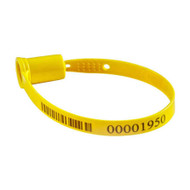
A tamper evident security seal is a single-use device designed to leave visible evidence if opened. Adding a barcode and sequential serial number creates a digital tracking point that can be associated with a container, order, freight manifest, or other record. Scanning the seal during issue, application, transfer, and removal can reduce reliance on paper logs, minimize manual transcription errors, and create a more consistent record of custody.
How Barcoded Seals Cut Losses and Save Labor
Barcoded seals help reduce loss by combining physical tamper evidence with identifiable data. When personnel scan a seal rather than manually record its number, the process can reduce data-entry errors while creating checkpoints throughout receiving, staging, storage, and dispatch.
The operational benefit comes from connecting seal identification with existing inventory and tracking processes. Standard product or packaging barcodes identify the goods themselves, while a security seal barcode identifies the closure protecting the container. Together, these data points can support verification at multiple stages:
- Seal verification: Scanning the seal confirms that the correct seal is on the correct container before freight is opened or moved.
- Faster data capture: Scanners can capture seal numbers in seconds, reducing the need for manual transcription.
- Fewer staging errors: Recording seal information at designated checkpoints can help personnel identify discrepancies before freight moves further through the facility.
- Reduced recounts: An intact, properly recorded seal provides a visible indication that a container has not been opened since the seal was applied.
- Targeted investigations: Scan records can help identify where a seal was issued, applied, transferred, or found to be missing or damaged.
- Documented custody records: Consistent records can support claims and dispute resolution when questions arise about shipment handling.
- Supply chain visibility: Scan data can give downstream partners visibility when that information is shared through the organization's systems.
By adding identifiable checkpoints to everyday receiving, staging, and dispatch procedures, barcoded seals can help facilities improve traceability while reducing clerical work.
Exposing Theft, Pilferage, and Inventory Shrinkage
Unrecorded shrinkage and recurring pilferage can be difficult to investigate when there is no reliable record of which seal was applied or where a discrepancy first appeared. Barcoded seals provide an identifying reference that can help personnel compare physical seal information with recorded custody data.
Scanning can help identify several types of discrepancies:
- Inbound and outbound mismatches: Comparing seal information at different checkpoints can identify a discrepancy before freight is accepted, opened, or moved.
- Swapped or cloned seals: Scanning at origin and destination can flag a seal that does not match the expected identification.
- Sequence gaps: Missing numbers in an assigned sequence can indicate that seals are unaccounted for and warrant further review.
- Misrouted freight: Recording seal information at designated checkpoints can help identify discrepancies associated with a shipment's movement.
Early detection can help organizations investigate potential problems before they extend further through the supply chain. AC&M's guidance on detecting cargo theft early explains how tamper evident security seals can support theft detection during transit.
Barcoded seals can also support traceability in industries where controlled handling and documentation are important, including pharmaceuticals, healthcare, and food and beverage.
Selecting the Right Barcoded Seal by Application
Choosing a barcoded seal depends on the container or closure being secured, the operating environment, and the level of physical protection required.
Security seals generally fall into two categories. Indicative seals provide visible evidence of access and are typically removable with basic tools. Barrier seals provide stronger physical protection and require tools such as bolt or cable cutters for removal.
Common applications include:
- Totes, cartons, and picking bins: Pull-tight seals provide adjustable closure and visible tamper evidence.
- Storage cages, carts, and roll bins: Plastic padlock seals provide an easy-to-identify closure for reusable equipment and storage applications.
- Corrugated cartons and packaged goods: Security labels provide an indicative tamper evident closure for boxes and other packaged items.
- Reusable containers and transport equipment: Strap seals provide consistent closure and identification for appropriate applications.
- Intermodal containers and dry vans: Bolt seals provide barrier-level security for applications requiring stronger physical protection.
- Tanks, valves, and gates: Higher-strength cable seals, including ISO 17712 high-security models, provide barrier-level protection where the application requires it.
Organizations can select from warehouse and storage seals and customize applicable products with color coding, serial numbers, logos, and barcodes.
Strengthening Audits and Loss Claims With Scannable Records
Applying barcoded seals creates a record that can connect a physical closure with the relevant handling information. If a unit with a missing or broken seal reveals inventory discrepancies or missing stock upon delivery, scan records can help personnel determine where the seal was issued, applied, transferred, or last inspected.
Consistent scan records can provide useful documentation across several operational touchpoints:
- Third-party logistics verification: Documented scan records can help 3PL providers demonstrate custody and handling procedures during customer reviews.
- Claims and dispute resolution: Documented custody records can support claims and help establish where a discrepancy may have occurred.
- Investigations: Time-stamped scan histories can help organizations establish a timeline when a seal is missing, damaged, or does not match the expected number.
- Internal process tracking: Verifiable records can help organizations determine whether established sealing procedures were followed.
- Compliance reviews: Consistent audit trails can support compliance reviews where organizations need to document security and handling procedures.
Barcoded seals do not replace physical inspection or proper recordkeeping. Instead, they add a scannable identification point that can make those processes more consistent.
Establishing an Effective Scan-to-Seal Process
A dependable scan-to-seal workflow connects physical verification with digital records from inventory receipt through seal removal. When security seals arrive, inspect the quantities, models, colors, markings, and numbering sequences, then store unassigned seals securely under a designated person or inventory manager. Scan seals when they are issued and again when they are applied, associating each record with the appropriate worker, container, staging area, bill of lading, work order, or container ID.
Continue scanning at relevant physical handoffs, gate checks, and staging transfers to maintain a consistent record of custody. Before removing a seal, inspect it and verify that its identifying information corresponds with the applicable record. Used seals should then be destroyed to prevent reuse. Organizations should also maintain a manual contingency log when handheld scanners are unavailable or malfunctioning, providing a backup record that can later be reconciled with electronic data.
Scanner selection can affect the reliability of the process, so use equipment with enough depth of field to read barcodes on the specific seal formats being deployed, including curved surfaces or flexible flags where applicable. Inventory planning is also important. Replenishment orders should be placed at least six weeks before expected depletion, while custom printed seals may require additional production time. Planning ahead helps maintain an adequate supply without disrupting the sealing process.
Traceable Protection Across the Supply Chain
Barcoded security seals give physical closures a trackable identity. Recording a seal at issuance, application, transfer, and removal creates a consistent reference for custody records, making discrepancies easier to investigate and reducing dependence on manual documentation.
American Casting & Manufacturing (AC&M) manufactures pull-tight, padlock, strap, cable, and bolt seals in the USA. Available customization includes serial numbers, logos, barcodes, color coding, and custom text, giving organizations flexibility to build identification into their sealing process. Explore the barcoded security seal product line to compare available options, or contact AC&M at (800) 342-0333 to discuss an application, request samples, or obtain a quote.