
How Tamper Evident Security Seals Help Shippers Detect and Stop Cargo Theft
Posted by Steve Diebold
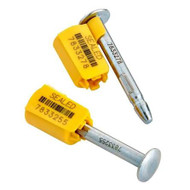
Tamper evident security seals help shippers detect and stop cargo theft by giving them a fast, visible way to confirm whether a container, trailer, or storage unit was opened without authorization. A seal cannot physically prevent every intrusion attempt, but it turns an invisible problem into a visible one, giving trained staff the evidence they need to investigate, report, and act before a small breach becomes a larger loss. American Casting & Manufacturing has spent over a century helping shippers understand exactly what tampering looks like and what to do once it is found.
Recognizing tampering is only half the job. The other half is knowing how to respond, and that response depends on training, documentation, and a supplier who can back up the seal with real expertise.
Common Signs That a Security Seal Has Been Tampered With
Most tamper evident security seals fail in one of three recognizable ways, and knowing what to look for is the first step in catching a problem early.
- The seal is broken. This is usually obvious, but a physical check is sometimes needed to confirm it, especially on seals with subtle break points.
- The seal does not match what was applied. Catching this requires the person checking the seal to be familiar with the exact seal type, color, and markings used on that shipment.
- The locking mechanism does not behave as expected. This requires both product knowledge and a hands-on visual or physical inspection at the point of use.
A broken seal is not automatic proof of theft. It should first be evaluated to determine whether the break happened through normal handling or through unauthorized access. Handling issues call for a stronger barcoded seal, which adds a traceable record on top of the physical tamper evidence. If the break points to unauthorized entry, the shipper should already have a response plan in place.
How Seal Tampering Typically Occurs
Seal violation takes several forms, and understanding them helps shippers train staff to catch what a casual glance would miss. Common tactics include concealing the act of opening and reclosing a seal to fool an untrained observer, substituting individual parts of a seal, altering or replicating printed markings, and swapping in a cloned or look-alike seal entirely.
A documented best practices program for applying, inspecting, and logging seals helps staff catch these tactics before they slip through. Staff who know exactly what the correct seal type, color, and markings should look like are far more likely to spot a substitution or a cloned seal on sight.
Tampering is often first discovered when a seal is cut and removed from use, but it also surfaces during scheduled inspections or later, when the seal is examined after arrival at another location. Without someone trained to examine the seal closely, tampering goes undetected, which is why a documented sealing program matters as much as the seal itself.
Why Proper Inspection and Tracking Prevent Missed Tampering
Shippers get the most protection from tamper evident security seals when the people using them follow consistent inspection, testing, and tracking procedures.
- Train staff on proper inspection and testing. Anyone applying or checking a seal should know how to confirm it is locked correctly, matches the shipment record, and shows no signs of substitution or replication.
- Keep consistent tracking records for seal numbers. Logging each seal number against its shipment closes the gap between what was applied and what arrives, making mismatches easy to catch.
- Photograph each seal at the point of application. Storing the photo near the point of application, attaching it to the shipping document, or logging it online is not yet common practice, but it is one of the most effective habits a shipping team can adopt.
AC&M's guide to tamper evident security seals covers general handling practices in more depth, though specific procedures for responding to a tampered seal are intentionally left flexible, since every shipper's operation and risk profile is different.
Steps to Take When a Tamper Seal Is Found
Once tampering is discovered, the typical next step is narrowing down the time and place where the violation occurred. This may take several shipping cycles to pin down, but it can eventually tell an investigator who is likely responsible, when the breach happened, and where it took place, particularly on moving applications like rail or over-the-road freight.
A few things to keep in mind when a tamper seal turns up:
- Internal policy should already define who is notified and how the incident is documented
- The suspected seal, or seals, should be preserved and not discarded
- Locking procedure should be reviewed before tampering is assumed, since improper application is a common and avoidable cause of false alarms
AC&M can offer general guidance for shippers building a response policy, though we do not get involved in a customer's internal procedures. What we need to help is the seal type involved and the full circumstances surrounding the suspected or confirmed tampering.
Proper Locking Procedures Reduce False Tamper Reports
Some of what looks like tampering is actually a locking error, and knowing the correct procedure for each seal type prevents both false reports and real vulnerabilities.
|
Issue |
What Happens |
Why It Matters |
|
Loose cable seal |
The cable is not pulled as tight as possible during closure |
Leaves the seal vulnerable to forced entry using basic tools |
|
Improper locking |
The seal is not fully engaged despite appearing closed |
Can look compromised on inspection when it was never breached |
|
Missed verification |
No check is made for the specific sound, feel, or visual confirmation point |
Increases the chance a locking error is mistaken for tampering, or missed entirely |
Most seal types have a specific sound and feel when properly locked, along with a visual inspection point that confirms full engagement. As an experienced cable seals supplier, AC&M can walk any customer through correct locking and inspection procedures, including direct, hands-on assistance from our team when needed.
Choosing a Trusted Security Seals Supplier for Testing and Support
When a tamper seal is discovered or suspected, returning it to the manufacturer for examination is one of the most reliable next steps. As a security seals supplier that manufactures its own product, AC&M is positioned to inspect any of our seals and report back on the tamper evidence found.
Findings are always shared in broad terms, and a full evaluation often requires control samples from the same production batch to rule out a manufacturing defect, which is a rare but possible cause. The same principle applies to related products, since shippers relying on security labels for cartons, files, or equipment access face similar tampering risks and the same inspection and reporting standards.
For freight moving internationally, seals tested to high security seal standards under ISO 17712 give shippers a documented basis for the seal's strength classification, tested against published international criteria and referenced in U.S. Customs and Border Protection's guidance on seal classification.
Partnering With a Tamper Evident Security Seals Supplier You Can Trust
Tamper evident security seals only protect a shipment when the people using them know what tampering looks like and how to respond to it. Recognizing a broken seal, an inconsistent marking, or a locking mechanism that will not engage correctly is the first line of defense, but a documented inspection and tracking process is what turns that recognition into a real deterrent against theft.
American Casting & Manufacturing has supported shippers with tamper evident security seals since 1910, offering hands-on guidance on locking, inspection, and response whenever a customer needs it. Read more about our company history, or reach out directly to talk through a specific tampering concern or sealing program question.