
Security Seal Strength Explained: Ratings, Testing Methods, and How to Choose the Right Seal
Posted by Steve Diebold
Security seals are widely used to protect cargo, assets, and sensitive equipment across industries such as logistics, utilities, manufacturing, and food transportation. Their primary purpose is to provide clear visual evidence if a container, package, or device has been opened or tampered with during handling or transit. Because of this critical role, many organizations ask an important question: how strong should a security seal actually be?
The answer depends on the specific application and operating environment. Some seals only need to indicate tampering, while others must endure rough handling throughout transportation and storage. Understanding seal strength measurements, testing standards, and real-world usage conditions helps organizations choose seals that balance durability with reliable tamper evidence.
Understanding the Difference Between Indicative and Barrier Seals
Security seals are generally classified into two primary strength categories: indicative seals and barrier seals. These categories help determine whether a seal is intended mainly to indicate tampering or to provide stronger physical resistance during handling and transport. Understanding this distinction helps organizations select the most appropriate tamper evident seals based on their operational and security requirements.
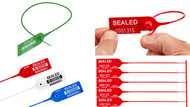
Indicative seals are designed to provide visible evidence if a container, enclosure, or piece of equipment has been opened. They are commonly used in environments where monitoring procedures and routine inspections serve as the primary security controls. Typically made from plastic or other lightweight materials, these seals can be removed with simple tools when authorized access is required. A fixed-length plastic seal is widely used to secure airline carts, tote boxes, retail shipments, and utility meter enclosures while providing clear tamper evidence.
Barrier seals provide greater strength and resistance and are intended for applications where cargo security and theft deterrence are more critical. Cable seals and bolt seals are commonly used in cargo transport, tanker trucks, and international shipping containers because they can withstand rough handling and require cutting tools for removal. Despite their added strength, these seals still function primarily as tamper evident devices rather than permanent locking mechanisms.
Units of Measurement for Seal Strength
Security seal strength is measured using standardized units that indicate the force required to break a seal under controlled testing conditions. These measurements allow manufacturers, logistics operators, and security professionals to compare seal models and determine whether a specific tamper evident seal is appropriate for a given application.
|
Measurement Unit |
Description |
Typical Use in Seal Testing |
|
Pounds Force (lbf) |
Pounds force measures the amount of pulling force required to break a seal during testing. |
Commonly used in the United States to describe seal strength. Many plastic indicative seals range from 30 to 90 lbf depending on design and material. |
|
Newtons (N) |
Newtons are the standard metric unit used to measure force internationally. |
Frequently used in global testing environments and international standards. |
|
Force Conversion |
One pound force equals approximately 4.45 newtons, allowing easy comparison between measurement systems. |
Example: A seal rated at 50 lbf is roughly equivalent to 222 N. |
These units help organizations understand the approximate load a seal can withstand before breaking. However, it is important to remember that these values reflect laboratory testing conditions, and real-world environments may introduce additional forces that influence how seals perform during everyday operations.
Methods for Calculating Seal Strength
Seal strength is determined through a controlled evaluation process known as tensile testing. This testing method measures how much pulling force a seal can withstand before the locking mechanism fails. Understanding the ideal seal strength for specific applications, along with how this testing process works, helps organizations interpret manufacturer specifications and compare different types of security seals more accurately.
- Seal Installation in Testing Equipment: The seal is first installed in specialized testing equipment exactly as it would be used in real-world applications. This ensures the test evaluates the performance of the fully locked seal assembly, not just individual components or materials.
- Gradual Application of Force: The testing machine slowly applies pulling force to the sealed device. The force increases steadily to simulate tension that may occur during transportation, handling, or operational use.
- Recording the Break Point: The machine continues increasing force until the seal breaks or the locking mechanism fails. The highest force applied just before failure is automatically recorded by the equipment.
- Establishing the Break Strength Rating: The recorded value becomes the seal’s break strength rating, which manufacturers publish to help customers compare products. In most cases, failure occurs at the locking mechanism, making it the most critical measurement when evaluating seal performance.
- Understanding Additional Material Strength Claims: Some manufacturers may also reference material properties such as tensile strength or shear resistance. While these figures describe the durability of the materials used, they do not always reflect the actual performance of the sealed device during use.
The most meaningful measurement when evaluating seal performance is the break strength of the fully locked assembly. This value represents the real force required to compromise the seal and provides the most accurate indicator of how the seal will perform in operational environments.
Avoiding the Risks of Overbuying Seal Strength
Many buyers assume that choosing the strongest available seal automatically improves security. However, selecting a seal that is stronger than necessary can create operational challenges. The most effective approach is to select a seal that matches the specific application, rather than defaulting to the highest-strength option. Evaluating factors such as environment, handling conditions, and seal types is an important part of choosing the best security seal.
Very strong seals often require specialized cutting tools for removal. In environments where containers or equipment must be opened frequently, this can slow routine operations and reduce efficiency. When these small delays occur repeatedly across large shipment volumes or daily workflows, they can significantly impact productivity.
Cost considerations also influence seal selection. While pricing differences within the same seal category are often minimal, moving to higher-strength options such as steel bolt seals may increase costs without providing meaningful benefits for certain uses. Testing sample seals in real-world conditions can help organizations determine the ideal balance between durability, usability, and operational efficiency.
Industry Regulations and Seal Strength Requirements
Certain industries require the use of security seals that comply with established standards. These regulations help maintain consistent protection for cargo, assets, and equipment moving through global supply chains. When regulations apply, they typically specify the type of seal or certification level that must be used rather than leaving the choice entirely to the organization.
Key regulatory considerations include:
- International Shipping Requirements: Global container transport often requires seals that meet recognized security standards. Programs such as CTPAT (Customs Trade Partnership Against Terrorism) require seals that comply with the ISO 17712 high-security seal standard.
- ISO 17712 High-Security Seal Certification: This international standard applies primarily to bolt seals and certified cable seals used on shipping containers and high-value cargo.
- Performance Testing Requirements: ISO 17712 certification includes rigorous testing procedures that evaluate a seal’s resistance to pulling, cutting, and tampering forces to verify that it meets high-security performance thresholds.
- Manufacturing and Traceability Controls: The certification process also requires strict manufacturing procedures, quality controls, and traceability measures to ensure seal authenticity and reliability.
- Industries With Flexible Requirements: Some sectors do not mandate a specific seal strength. Instead, they simply require tamper-evident seals for transport, storage, or asset handling.
When detailed regulations are not provided, organizations must evaluate their operational risks, handling conditions, and inspection procedures to determine the most appropriate seal type and strength. Selecting seals that align with both regulatory expectations and practical operating conditions ensures effective security without unnecessary complexity.
Choosing the Right Seal Strength for Your Application
Selecting the right seal strength requires evaluating both security requirements and operational conditions. Understanding the difference between indicative and barrier seals helps organizations determine which option best fits their application, while proper testing methods provide insight into how seals perform under controlled conditions. Organizations should also consider real-world factors such as handling procedures, transportation environments, and regulatory requirements, as these directly influence seal performance and reliability.
For more than 110 years, American Casting & Manufacturing has provided high-quality tamper evident sealing solutions across multiple industries. Our team helps organizations identify the most effective seal types and strength levels for their specific needs. For guidance in selecting the right seal or exploring available options, contact us at Toll-Free: (866) 360-6748 or 516-349-7010, Mon–Fri, 9 am–5 pm EST, or info@seals.com. Our specialists are ready to help you implement sealing solutions that support both operational efficiency and security compliance.