
Workplace Safety: How Security Seals Support a Safer Work Environment
Posted by Steve Diebold
Workplace safety refers to the policies, procedures, and physical safeguards that protect employees from injury, illness, and death while on the job. According to the U.S. Bureau of Labor Statistics, workplace accidents claim the lives of more than 14 American workers every day, many of which could have been prevented with proper controls in place.
Maintaining a safe work environment is not a passive effort. It requires consistent compliance with established regulations, the right protective equipment, and physical safeguards that make hazards visible and access points accountable. For industries handling equipment, hazardous materials, or high-value assets, tamper evident seals are one of the most practical tools available to support that accountability.
Building Awareness For Workplace Safety
While National Safety Month takes place each June, its message extends far beyond a single month. Organized by the National Safety Council (NSC), the initiative highlights the ongoing reality that preventable workplace injuries and fatalities remain a serious concern year-round. For organizations, it serves as a valuable checkpoint to evaluate compliance, retrain staff, and identify gaps in safety programs, but these efforts should continue well beyond June.
High-risk industries such as construction, transportation, oil and gas, and manufacturing face constant exposure to workplace hazards. Workers regularly operate heavy equipment, handle dangerous materials, and perform tasks in extreme conditions. While National Safety Month brings added focus to these risks, the responsibility to prioritize safety does not end when the calendar turns. Instead, it should remain a daily operational standard embedded in every process and decision.
How OSHA and the NSC Framework Guide Workplace Compliance
The Occupational Safety and Health Administration (OSHA) is the federal agency responsible for setting and enforcing workplace safety standards across the United States. Alongside OSHA, the National Safety Council has developed a practical framework that helps organizations evaluate and strengthen their existing safety posture. The framework centers on three core areas:
- Compliance measurement: Identifying whether current practices meet regulatory requirements, including how equipment is used, maintained, and inspected at every operational touchpoint.
- Hazard tracking: Monitoring known risk areas over time for signs of deterioration or emerging vulnerability, rather than only responding after an incident has occurred.
- Employee engagement: Building a safety culture where workers actively participate in identifying risks, following protocols, and holding one another accountable through ongoing training and communication programs.
Together, these elements form the foundation of a proactive safety program rather than a reactive one.
Where Security Seals Fit Into a Workplace Safety Program
In industrial and high-risk environments, physical access control is a critical but often overlooked component of workplace safety. Equipment panels, storage units, chemical containers, and machinery access points can all pose serious hazards if accessed by unauthorized personnel or tampered with between inspections.
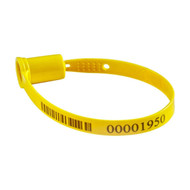
A high security seal is a tamper-indicating device engineered to provide clear, immediate evidence of unauthorized access or interference. When applied to equipment enclosures, storage containers, or operational access points, these seals create a visible record of whether a protected area has been disturbed. This supports both hazard tracking and compliance measurement, two of the core pillars of the NSC framework.
Sourcing these products from a qualified tamper evident seals supplier ensures that the seals used across a facility meet the strength and tamper-visibility requirements appropriate for the specific application and industry.
Security Tape and Labels for Surface-Level Hazard Marking
Beyond mechanical seals, surface-applied tamper indicators play an important supporting role in workplace safety programs. Security tape is an adhesive tamper-indicating film that can be applied across access panels, equipment doors, storage lids, and inspection points. Once disturbed, it tears irreparably or leaves a permanent residue pattern, making any unauthorized access immediately visible during routine walkthroughs.
Security labels serve a similar function in a more compact format, defined as adhesive indicators that display a permanent tamper message upon removal. They are well suited for individual equipment components, chemical containers, and anywhere a full mechanical seal is not practical. Together, security tape and security labels extend tamper visibility to surface-level access points that physical seals alone cannot cover.
Working with a reliable security seals supplier that offers both mechanical and adhesive tamper indicators allows safety managers to build a layered protection program suited to the full range of hazards present in their facility.
Practical Safety Tips for High-Risk Work Environments
Compliance frameworks and tamper evident tools are most effective when paired with consistent day-to-day safety practices. The following measures form the operational backbone of any strong workplace safety program:
|
Practice |
Purpose |
|
Training when new tools or equipment are introduced |
Reduces operator error and familiarizes staff with proper handling procedures |
|
Use of high-quality PPE, including eye protection and fire-resistant clothing |
Provides physical protection against environmental and equipment-related hazards |
|
Open communication among coworkers |
Enables faster identification and reporting of hazards before they escalate |
|
Senior worker mentorship for new employees |
Transfers institutional knowledge and reinforces safe habits from the outset |
These practices work best when supported by a physical environment where access points are secured, equipment integrity is verifiable, and tamper evidence is built into daily inspection routines.
Choosing the Right Sealing Solution for Your Industry
The type of seal best suited to a workplace safety program depends on the specific hazards and access points involved. The table below outlines common applications across high-risk industries:
|
Application |
Recommended Seal Type |
|
Equipment enclosure panels and access doors |
Padlock seal or plastic security seal |
|
High-value or regulated equipment access points |
High security seal with serial number |
|
Surface joints, inspection covers, and storage lids |
Security tape |
|
Individual components and chemical container closures |
Security labels |
|
Cargo and transport units in logistics operations |
Cable seals or bolt seals |
Matching the seal type to the specific vulnerability ensures both performance and cost efficiency across the facility.
Building a Safer Workplace Starts with the Right Controls
Workplace safety is most effective when it combines regulatory compliance, employee engagement, and physical access controls that make hazards visible and accountable. Tamper evident seals, security tape, and security labels support that third layer by ensuring that any unauthorized access to equipment or storage points is immediately detectable.
American Casting and Manufacturing has been manufacturing tamper evident sealing solutions for over 110 years, serving industries where workplace safety and asset integrity are non-negotiable. To learn more about the right sealing solution for your facility, reach out to the team directly.