
Understanding CTPAT Compliance and Its Impact on Supply Chain Security
Posted by Steve Diebold
Global trade depends on trust, visibility, and strong security practices across supply chains. In the years following major security threats to international commerce, governments began strengthening border control measures to prevent the exploitation of cargo systems. One of the most significant initiatives to emerge in the United States was a partnership-based approach, rather than a purely enforcement-driven one. This shift acknowledged that securing global trade could not rely on inspections alone. Instead, it required cooperation between government agencies and private businesses. By recognizing shared responsibility, this approach laid the groundwork for stronger and more resilient supply chains.
This collaborative model emphasizes prevention, accountability, and consistency across international trade operations. By encouraging companies to adopt proactive security measures rather than react to violations, the program promotes long-term risk reduction. Businesses that move goods across borders benefit from clearer expectations and more predictable processes. Improved transparency helps reduce delays, inspections, and disruptions at ports of entry. Over time, these efficiencies translate into operational and financial advantages. This balance between vigilance and efficiency is the foundation of CTPAT compliance.
The Origins of CTPAT and its Impact on Global Trade
The Customs-Trade Partnership Against Terrorism was introduced as a response to growing concerns about cargo security. Following heightened awareness of how global supply chains could be exploited, U.S. authorities sought a preventive solution. Rather than relying solely on inspections, the program focused on strengthening security before goods reached the border. This marked a shift from reactive enforcement to proactive risk management. Early participation included a limited group of major importers willing to collaborate closely with regulators. Their involvement helped shape the framework that would later expand across industries. Over time, the initiative evolved into a cornerstone of U.S. trade security policy.
CTPAT operates under the oversight of U.S. Customs and Border Protection, commonly known as CBP. CBP designed the program to reduce vulnerabilities throughout international supply chains. The goal was not only to intercept threats, but also to prevent them from entering the system altogether. By focusing on best practices, CBP encouraged companies to assess their own operations critically and align toward becoming CTPAT compliant. This collaborative structure allows businesses to align internal procedures with national security priorities. As participation increased, the program demonstrated measurable improvements in cargo security. Today, it represents a trusted framework recognized across global trade networks.
What began with a small group of partners has grown into a vast international alliance. Thousands of entities now participate, spanning importers, carriers, brokers, and manufacturers. Participation extends beyond U.S. borders, incorporating Canadian and Mexican trade partners as well. This expansion reflects the interconnected nature of modern commerce. When one link in the chain is weak, the entire system becomes vulnerable. CTPAT addresses this risk by promoting consistent security standards. Its continued growth underscores its relevance in an increasingly complex trade environment.
What CTPAT Compliance Means for Businesses
CTPAT is a voluntary program, but participation carries significant responsibility. Companies that apply must demonstrate a genuine commitment to supply chain security. This includes reviewing internal procedures, physical security, personnel policies, and documentation practices, often supported by physical controls such as high security seals. Applicants are expected to identify risks and implement corrective measures proactively. Compliance is not a one-time action, but an ongoing process of evaluation and improvement. Businesses must maintain transparency and cooperate with CBP throughout their participation. This level of accountability helps build trust between the public and private sectors.
Once accepted, companies are evaluated based on how well they meet established security criteria. Those that satisfy baseline requirements are granted validated partner status. Higher tiers are awarded to organizations that exceed minimum expectations. These advanced partners often implement innovative security measures or contribute to broader industry collaboration. Achieving higher tier status signals operational maturity and reliability. It also reflects a willingness to invest in long-term risk mitigation. This distinction can set compliant businesses apart in competitive markets.
Maintaining compliance requires consistent documentation and regular internal reviews. Supply chain changes must be assessed for new vulnerabilities. Employees should be trained to recognize and report security concerns. Physical safeguards must remain effective as operations scale or shift. Companies are also expected to respond promptly to CBP inquiries. This ongoing diligence reinforces the integrity of the program. Over time, compliance becomes embedded into daily operations, rather than treated as a separate obligation.
Key Benefits of Becoming CTPAT Compliant
Participating in CTPAT offers businesses more than regulatory alignment, it delivers operational, strategic, and security-related advantages across the supply chain. These benefits support efficiency, strengthen risk management, and improve collaboration with U.S. Customs and Border Protection. Below are the primary advantages organizations gain through participation.
- Reduced Inspections and Faster Cargo Movement: One of the most immediate benefits of CTPAT participation is a reduction in inspection frequency. Cargo moving through compliant partners is considered lower risk, allowing CBP to redirect enforcement resources elsewhere. This results in faster processing times and reduced congestion at ports of entry. More predictable transit schedules help businesses plan logistics with greater accuracy. Over time, these efficiencies contribute to lower operational costs. For high-volume shippers, the cumulative impact can be significant.
- Direct Access to CBP Support and Expertise: CTPAT partners receive dedicated support through an assigned Supply Chain Security Specialist. This specialist is a consistent point of contact with CBP, simplifying communication around security expectations. Questions and concerns can be addressed more efficiently, reducing delays caused by uncertainty or misinterpretation. Early issue resolution helps prevent compliance gaps from escalating. Partners also receive timely updates on regulatory changes. This ongoing guidance supports long-term compliance and proactive risk management.
- Priority Treatment and Additional Trade Advantages: Benefits extend beyond routine border crossings. CTPAT participants may receive priority processing following security disruptions or capacity constraints. The program also provides access to security seminars and industry conferences focused on emerging threats and best practices. These opportunities support continuous improvement and awareness. In certain locations, partners may qualify for FAST lane access, further accelerating cross-border movement. Together, these advantages enhance both supply chain security and competitive positioning.
Becoming part of CTPAT delivers measurable benefits that extend across logistics, compliance, and operational efficiency. Reduced inspections, dedicated CBP support, and priority treatment help businesses move goods more reliably while strengthening security practices. As global trade grows more complex, these advantages play a critical role in maintaining resilient and competitive supply chains.
The Importance of Security Seals in CTPAT Compliance
Physical security is a critical component of CTPAT requirements. Cargo must be protected against unauthorized access during transit. High-quality security seals play a vital role in meeting this expectation. Seals provide visible evidence of tampering or interference. They help ensure accountability at every handoff point. Without proper sealing, vulnerabilities increase significantly. As a result, seals are a foundational element of compliant supply chains.
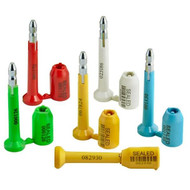
Different cargo types require different sealing solutions. Cable seals, bolt seals, and pull-tight seals each serve specific purposes. Selecting the appropriate seal depends on risk level and transport method. Compliance requires seals that meet recognized strength and performance standards. Proper application and documentation are equally important. Seal numbers must be recorded and verified at each checkpoint. This traceability supports both security and audit readiness.
American Casting and Manufacturing has long supported CTPAT compliance through reliable sealing solutions. With over 110 years of experience, the company understands the demands of secure logistics. Its seals are designed to meet stringent regulatory expectations. Short lead times help businesses respond quickly to operational needs. Consistent quality ensures dependable performance in real-world conditions. These attributes make proper sealing achievable for compliant organizations.
Balancing Security and Efficiency With CTPAT Compliance
CTPAT compliance plays a critical role in strengthening supply chain security while supporting the efficient movement of goods across borders. By participating in the program, businesses demonstrate a proactive commitment to risk management, transparency, and collaboration with regulatory authorities. The structured framework of CTPAT encourages continuous improvement, helping organizations reduce vulnerabilities before they become costly disruptions. Beyond security, compliance delivers operational benefits such as fewer inspections, faster processing, and greater predictability in logistics planning. These advantages allow companies to operate with confidence in an increasingly complex global trade environment. Over time, CTPAT compliance becomes an integral part of responsible and resilient supply chain management.
Achieving compliance also depends on reliable physical security measures, including the use of high-quality security seals. With more than 110 years of experience, American Casting and Manufacturing supports businesses by providing dependable sealing solutions that meet stringent CTPAT requirements. From cable seals to bolt and pull-tight seals, AC&M helps organizations maintain cargo integrity and accountability throughout transit. Their expertise enables companies to align security practices with regulatory expectations without sacrificing efficiency. Businesses seeking guidance or product support can contact AC&M Toll-Free at (866) 360-6748, 516-349-7010, or info@seals.com. Assistance is available Monday through Friday, from 9am to 5pm EST.