
Security Seals for Utility Theft and Meter Tampering Prevention
Posted by Steve Diebold
Security seals are tamper-indicating devices designed to show visible evidence of unauthorized access, making them one of the most practical tools for protecting utility meters and supply points. Every year in the United States, up to $10 billion worth of electricity is stolen, alongside significant volumes of gas, potable water, and broadband connectivity. These losses pass directly to consumers and taxpayers.
Utility theft rarely happens through brute force alone. In most cases, it depends on unprotected access points that go unnoticed for months. The right security seals, properly applied, make unauthorized access far more difficult and ensure that any tampering attempt is immediately detectable before the damage compounds.
Why Conventional Locks and Enclosures Fall Short
Traditional locks and enclosures have not kept pace with the tools used to defeat them. Picking and prying equipment has become widely accessible, meaning even specialized protective hardware can be compromised without leaving an obvious trace. Enclosures that house meters and supply points are particularly vulnerable because they must remain accessible to authorized technicians while staying resistant to everyone else.
Biometric solutions such as fingerprint readers and retinal scanners do exist, but they carry a significant cost premium that makes wide-scale deployment impractical. Retrofitting an entire utility network with biometric access hardware is rarely financially viable.
This gap is exactly where security seals for utility applications perform best. They are cost-effective, simple to deploy, and designed so that any tampering attempt leaves unmistakable physical evidence.
How Cup Seals Protect Meter Fasteners
One of the most targeted vulnerabilities on utility meters is the fastener. Loosening a single bolt or screw can grant access to internal metering components, making fastener protection a critical first line of defense.
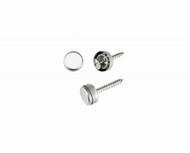
Cup seals, also called screw and bolt protection devices, are designed to cover the heads of fasteners entirely, preventing any tool from gaining purchase on the screw. Here is how the application process works:
- The back piece of the cup seal is positioned over the fastener, with the screw inserted through the strategically placed hole.
- The screw is tightened to the required torque with the included bits.
- The front cover is clicked into place, engaging a self-locking mechanism automatically.
Once seated, the cup seal cannot be removed without visibly distorting its structure. That distortion serves as a clear, unambiguous tamper indicator. Inspectors can confirm seal integrity at a glance, with no specialized equipment required.
As a trusted tamper evident seals supplier, American Casting and Manufacturing engineers cup seals to withstand considerable force before showing deformation, which means minor contact or vibration will not trigger a false positive, but any deliberate tampering attempt will.
Padlock Security Seals: Simplicity with Strong Deterrence
For utility enclosure doors and panels, padlock seals offer a practical alternative to mechanical locks. A padlock seal is a disposable, single-use locking device that combines the familiar form factor of a padlock with the tamper evidence of a breakaway seal.
The copolymer plastic construction makes these seals durable in outdoor and industrial environments. Key functional features include:
- A smooth sliding engagement mechanism that allows quick, consistent installation
- Customizable color options to support color-coded inspection or access control systems
- A printable field for recording the installer's name, date, and any access warnings
- A body that can only be released by cutting, making unauthorized removal immediately visible
These seals function as a high security seal option in settings where both deterrence and documentation matter. The combination of physical resistance and written accountability discourages tampering by raising both the difficulty and the risk of detection.
Expanding Protection: Security Tape and Labels for Utility Applications
Meters and utility enclosures often have seams, panels, and access covers beyond just fasteners and doors. Security tape refers to adhesive tamper-indicating film applied directly across joints or openings. When the tape is disturbed, it either tears irreparably or leaves a residue pattern that cannot be concealed.
Security labels serve a similar purpose in a more compact format. Defined as adhesive indicators that display a permanent tamper message upon removal, security labels are well suited for covering access ports, panel joints, and meter serial number areas where a full seal is not practical. Together with cup seals and padlock seals, they allow operators to build a layered protection strategy that covers multiple entry points on a single asset.
Working with a reliable security seals supplier means gaining access to all of these formats under one source, simplifying procurement and ensuring consistency across a sealing program.
What Makes a Utility Sealing Program Effective?
A well-designed sealing program does more than place individual seals. It establishes a system where every protected point is accounted for, inspected on a regular schedule, and documented when replaced. The following elements contribute to an effective program:
|
Element |
Purpose |
|
Numbered or barcoded seals |
Enables tracking and ties each seal to a specific asset or inspector |
|
Color coding by period or zone |
Allows quick visual identification of when and where a seal was placed |
|
Inspection logs |
Creates an auditable record of tamper events and replacements |
|
Consistent seal type per application |
Reduces installation errors and supports standardized inspection criteria |
American Casting and Manufacturing products are self-contained with no loose components to track separately, which simplifies field deployment and reduces the risk of installation errors.
Choosing the Right Seal for Each Utility Application
Not every application calls for the same seal type. Matching the seal to the specific vulnerability is essential for both performance and cost efficiency. The table below outlines the primary use cases:
|
Application |
Recommended Seal Type |
|
Bolt and fastener heads on meter bodies |
Cup seal |
|
Enclosure doors and cabinet panels |
Padlock seal |
|
Panel seams and access cover joints |
Security tape |
|
Port covers and serial number areas |
Security labels |
|
High-value or regulated metering infrastructure |
High security seal with serial number |
Sourcing these products from a single security seals supplier streamlines ordering, ensures product consistency, and simplifies training for field technicians.
Protecting Utility Infrastructure with the Right Security Seals
Utility theft and meter tampering persist largely because vulnerable access points go unprotected and undetected for extended periods. Security seals change that by making every tampering attempt visible, traceable, and significantly harder to execute without consequence. When the right seal is matched to the right application, the result is a protection layer that is both practical and cost-effective.
American Casting and Manufacturing supplies a full range of security seals purpose-built for utility infrastructure, from cup seals that lock down meter fasteners to padlock seals that secure enclosure doors. To find the right solution for your operation, reach out to our team directly at toll-free (866) 360-6748, locally at 516-349-7010, or by email at info@seals.com. Our team is available Monday through Friday, 9am to 5pm EST.