
Security Seals for Medical Carts and Equipment: What an Intact Seal Confirms Before Use
Posted by Steve Diebold
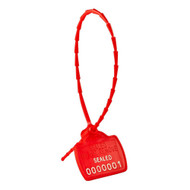
Security seals on medical carts provide a visible indication that a cart has remained unopened since its most recent restocking. These single-use devices secure a closure, and staff must break them to open the cart. A tamper-evident seal leaves visible signs when someone attempts to open or remove it. An intact seal gives nursing staff a quick way to confirm no one opened the cart since its last check. If the seal is missing or damaged, staff know to inspect the contents before putting the cart into service. This approach also applies to storage cabinets, supply totes, and other patient care equipment throughout a healthcare facility.
Medical carts are mobile storage units used to carry medications and essential patient care supplies. Crash carts are a specialized type of medical cart stocked with equipment and medications needed during resuscitation and other emergencies. Both must remain accessible while giving staff confidence in the condition of their contents.
Security Seals for Medical Carts Indicate Restocking and Readiness
After cleaning and restocking a medical cart, facility staff can secure its closure or hasp with a new seal. A hasp is the fastening point through which the seal passes to keep the cart closed. Once attached, the seal provides a visible indication that the cart has completed its preparation process.
Many hospitals build medical cart seals into their routine cart inspection procedures:
- Staff clean the cart, replenish supplies, and review medication expiration dates.
- An authorized employee attaches a numbered seal to the cart’s closure or hasp.
- Staff enter the seal number on the cart’s inspection sheet.
- During each shift, staff examine the seal and compare its number with the recorded entry.
- Following cart use, staff restock the contents and install a replacement seal.
It’s important to understand what a seal can and cannot establish. An intact seal does not independently verify that cleaning procedures were completed correctly. Rather, it indicates that no one has opened the cart since the last documented restocking and sealing procedure.
Security Seals on Medical Carts Should Be Removable Without Tools
Emergency situations leave little time for staff to locate cutting equipment. Medical cart seals should therefore break by hand. Clinicians can then reach medications and supplies without delay.
When selecting tamper padlock seals or other hand-removable seals for medical carts, facilities should consider these characteristics:
- Opens with a simple twist or pull, without requiring knives or cutting tools.
- Shows visible, irreversible damage after removal to discourage reuse.
- Remains securely attached to the cart’s latch during routine movement and handling.
- Features a clearly printed identification number that staff can quickly read and record.
Plastic padlock seals are a practical option for many medical cart applications. Depending on the design, staff can release them with one hand or break them at a set point.
Healthcare Security Seals for Carts, Cabinets, and Patient Care Devices
Healthcare security seals, often called medical seals, are tamper-evident devices for hospitals and clinics. They secure equipment, supply storage, and medication containers. Choosing an appropriate seal requires considering the closure design, access requirements, and frequency of use.
|
Equipment |
Common Seal Type |
Why It Fits |
|
Medical and crash carts |
Plastic padlock seal |
Attaches to a hasp and can be broken by hand |
|
Medicine cabinets |
Plastic padlock seal or pull-up seal |
Secures the latch and provides visible evidence of opening |
|
Medication pumps, monitors, and respirators |
Pull-up wire seal with a plastic body |
Accommodates different equipment access points after setup |
|
Valves |
Pull-tight seal |
Adjusts to handles of different dimensions |
|
Supply totes |
Pull-tight seal |
Fits lids and handles across different container sizes |
A pull-up seal features an adjustable locking mechanism. The user draws its strap or wire through the seal body until it fits securely. This flexibility helps when patient care equipment has access points that differ in size or configuration. Healthcare procurement teams can review how pull-up seals work before setting equipment-specific requirements.
Healthcare Security Seals Extend Beyond Medical Carts
Medical carts are only one of several applications for security seals in healthcare facilities. Any container that needs visible proof of unauthorized access can carry a tamper-evident seal.
Common applications include:
- Supply storage rooms and medical cabinets
- Department-to-department supply totes
- Pharmaceutical containers and controlled substance bins
- Medical waste containers and sharps disposal units
- Laboratory materials and specimen bags
Pull-tight seals are particularly useful for many of these applications because their adjustable straps accommodate different closure sizes. Sealed totes and sample containers keep diagnostic supplies intact from manufacturer to facility.
Laboratories have additional reasons to maintain secure handling procedures. Specimens and testing materials need to reach their destinations in the same condition in which they were collected. Security seals can support medical sample integrity as materials travel between hospital departments, testing facilities, and outside laboratories.
Serialized Seals Make Medical Cart Inspections Easier to Document
Serialized seals, also called numbered seals, feature unique, consecutively assigned identification numbers. Each number can be associated with a specific sealing event. This creates a straightforward way to connect physical seals with inspection and inventory records.
For hospitals, this provides several operational advantages:
- Documentation: Employees can record who secured a cart and when the seal was applied.
- Inventory tracking: Seal numbers connect restocking activities with dated inspection records.
- Access monitoring: A missing seal or number discrepancy gives staff a reason to investigate potential unauthorized access.
- Operational oversight: Facility managers can review inspection records and identify carts that require more frequent attention.
Barcodes can make seal tracking more efficient. With barcoded security seals, employees can scan identification numbers instead of entering them manually. American Casting & Manufacturing (AC&M) also offers custom serialization and barcoding, with options such as department names and logos printed directly on seals.
This approach can be especially valuable in hospitals managing medical carts across multiple departments and nursing units. A closer look at how serial numbers streamline operations shows the effect on daily workflow.
When Are Pull Tight Seals a Better Choice Than Padlock Seals for Medical Equipment?
Pull-tight seals are generally more suitable for equipment with varying closure dimensions or handles that require an adjustable loop. Plastic padlock seals are often the better option for fixed hasps where staff need a straightforward, hand-removable closure.
A pull-tight seal is a single plastic strap that feeds through a locking head and tightens around an object. A plastic padlock seal uses a compact locking body to secure a hasp, functioning much like a small disposable padlock.
|
Factor |
Pull-Tight Seal |
Plastic Padlock Seal |
|
Closure fit |
Adjustable to accommodate different sizes |
Designed for compatible hasp openings |
|
Typical uses |
Totes, waste bins, sample bags, and sharps containers |
Medical carts, cabinets, and emergency kits |
|
Main advantage |
Versatility across different container types |
Convenient access for emergency equipment |
Healthcare facilities do not necessarily need to choose one seal style for every application. Many use both. Padlock seals go on emergency carts and cabinets, and pull-tight seals go on totes and waste containers.
The smooth pull-tight Model SPT is one option for totes and similar containers that require an adjustable closure.
Security Seals for Medical Carts Provide a Visible Readiness Check
Security seals show healthcare staff whether anyone opened a medical cart since its last documented restock. Hand-removable designs keep emergency access fast. Serial numbers record each sealing and inspection event.
American Casting & Manufacturing supplies plastic padlock seals, pull-tight seals, and barcoded security seals for hospitals, clinics, and other healthcare applications. Facilities updating cart-sealing procedures can explore the available healthcare security seal options by application.