
How Cargo Security Seals Protect Shipments in a Volatile Shipping Environment
Posted by Steve Diebold
Cargo security seals protect shipments by giving shippers a visible, verifiable way to confirm whether a trailer, container, or tanker has been opened since it was loaded. They do not physically stop a determined thief, but they create tamper evidence, support tracking and chain of custody, and deter opportunistic theft along the route. For over a century, American Casting & Manufacturing has helped shippers, carriers, and government agencies choose and apply the right seal for the job, making cargo security seals one of the most practical and widely used layers of protection in modern freight security.
Cargo theft has become a bigger part of the national conversation. Inflation, extended transit times, and ongoing supply chain pressure have put a spotlight on freight crime that was once a quieter, industry-specific problem. For shippers trying to protect loads worth thousands or millions of dollars, understanding how cargo security seals fit into a broader security strategy matters more than ever.
What Is Driving the Rise in Cargo Theft?
Cargo theft is not new, but the conditions around it have shifted. Organized theft rings have grown more sophisticated, often posing as legitimate carriers or brokers to gain access to freight before it ever reaches the road. According to the cargo theft trends tracked by the National Insurance Crime Bureau, losses climbed sharply in 2024 and were projected to keep climbing, with electronics, food and beverage, pharmaceuticals, and building materials among the most targeted categories.
A few factors are compounding the problem:
- Longer, more complex supply chains create more handoff points where cargo can be diverted
- Digital load boards and freight-matching platforms have opened new avenues for fraudulent pickups
- High-value goods sitting in transit or storage remain attractive, low-risk targets for organized crews
- Rising consumer prices have increased the resale value of stolen freight
None of this means cargo owners are defenseless. It means the layers of protection around a shipment, including cargo security seals, need to work together with driver training, route planning, and vetted transportation partners.
Types of Cargo Security Seals Available to Shippers
Not every shipment needs the same level of protection, which is why cargo security seals are generally grouped into two categories: indicative seals and barrier seals. Here is what each category is designed for and where it fits into a shipper's sealing program.
Indicative seals show evidence of tampering or unauthorized entry. They are lightweight and fast to apply, making them the standard choice for the majority of domestic freight moves.
- Plastic pull-tight seals offer a quick, low-cost way to confirm a trailer or container has not been opened in transit.
- Wire and plastic-and-wire seals combine flexibility with added tamper resistance, used where a slightly stronger indicative option is needed.
- Barcoded seals support serialized tracking, letting shippers log and verify individual seal numbers against a shipment record.
Barrier seals add a physical obstacle in addition to tamper evidence. They typically require bolt cutters or hydraulic tools to remove, making them common on international, high-value, or high-risk moves.
- Cable seals use a steel cable to physically secure a container or trailer door, offering higher resistance than most indicative options.
- Bolt seals use a solid metal bolt and locking mechanism, widely used on ISO shipping containers and international freight.
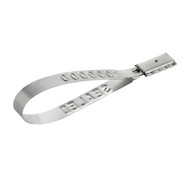
- Metal strap seals provide a durable, tamper-resistant option for securing doors, hatches, or valves on a range of conveyance types.
AC&M manufactures both categories in plastic, wire, and metal, including hybrid designs that combine materials to fit unique conveyance types. Matching the seal type to the shipment, rather than defaulting to a single seal across an entire fleet, is one of the simplest ways shippers strengthen their security posture.
How Cargo Security Seals Deter and Detect Tampering
A cargo security seal works by making it obvious, at a glance, whether a container or trailer has been opened after it was sealed. Once broken, a compliant seal cannot be reapplied without visible evidence, which is what gives receiving teams, drivers, and inspectors a fast way to check the integrity of a load at any point in transit.
Beyond the seal itself, many shippers use variation as a security strategy. Rotating seal colors, markings, or serial number formats makes it harder for thieves using cloned or look-alike seals to go undetected. These same variations also support tracking and tracing, since a seal's markings can identify its purpose, origin, destination, or the specific business unit that applied it. AC&M works directly with shippers to design these rotation programs, drawing on decades of experience serving private, government, and military customers.
It is worth being direct about what a seal can and cannot do. A cargo security seal is a tamper evident tool, not a lock in the traditional sense, and a sufficiently motivated actor with the right tools can defeat almost any seal given enough time and privacy. The value of the seal is in the evidence it leaves behind and the deterrent effect it has on opportunistic theft, not in making a shipment physically impossible to breach. For that reason, seals work best as one layer inside a documented sealing program, which AC&M outlines in its tamper evident security seals guide.
Compliance Standards That Matter for Cargo Security Seals
For shippers moving freight across borders or working with government and defense customers, compliance standards are often non-negotiable. Two standards come up most often in cargo security seal programs.
CTPAT (Customs-Trade Partnership Against Terrorism) is a voluntary program run by U.S. Customs and Border Protection that asks participating companies to document and strengthen supply chain security practices, including the use of compliant seals. Shippers can review current CTPAT program requirements directly through U.S. Customs and Border Protection.
ISO 17712 sets performance-based testing criteria that classify mechanical seals into security levels, including a "high security" classification. It is important to understand that this rating reflects a laboratory-tested strength standard, not a guarantee that a seal cannot be defeated in the field. AC&M's ISO 17712 high security seals are manufactured and tested to meet these classifications, giving shippers a documented, verifiable basis for the seals they choose.
Choosing seals that meet the correct standard for a given trade lane or customer requirement is often the difference between a smooth customs process and a costly delay.
Key Considerations for a Strong Cargo Security Seal Program
A strong sealing program is built on more than the seal itself. A few questions are worth asking before settling on a supplier or a seal type:
- Does the seal type match the risk level of the shipment, the route, and the cargo value?
- Is there a documented process for applying, verifying, and logging seals at both ends of the trip?
- Are seal numbers checked and recorded before departure and again at delivery?
- Does the program include periodic rotation of seal markings to reduce the risk of cloning?
- Is the supplier able to support both stock and custom orders without disrupting the shipping schedule?
AC&M has published a full set of recommendations in its best practices for a sealing program, developed specifically to help shippers close the gap between having seals on hand and running a program that actually holds up to scrutiny. These same principles apply broadly to cargo, freight, and logistics shippers, where multiple handoffs and long transit times raise the stakes for consistent sealing practices.
Why Shippers Trust AC&M for Cargo Security Seals
American Casting & Manufacturing has been producing seals since 1910, supplying customers through two world wars, multiple economic downturns, and recent global supply chain disruption. The company remains under the same family's ownership and management four generations later, manufacturing in the United States with close, hands-on control over production, quality, and customer service.
That combination of longevity and structure gives AC&M the flexibility to do things larger, less centralized manufacturers often cannot, including fast customization, rapid-response order fulfillment, and direct guidance on which cargo security seals fit a customer's specific risk profile. A large stock inventory supports immediate shipment for common seal types, while the company's production capacity supports custom orders without long lead times. You can read more in AC&M's company history, including its certifications.
Protecting Shipments with the Right Cargo Security Seals
Cargo security depends on more than preventing theft outright. It depends on maintaining a verifiable chain of custody at every handoff, and cargo security seals remain one of the most reliable ways to hold that chain together. When a seal arrives intact, the shipment moved without compromise. When it does not, that break is visible, documented, and actionable, which is the core answer to how cargo security seals protect shipments in a volatile shipping environment.
American Casting & Manufacturing offers a full range of indicative and barrier seals built for the realities of today's cargo, freight, and logistics operations. To find the right cargo security seal for your shipment, reach out to the AC&M team directly.