
Security Seal Tracking Guide: Best Practices, Forms, and Documentation for Asset Protection
Posted by Steve Diebold
Security seals help protect assets, verify the chain of custody, and prevent unauthorized access. However, a seal is only effective when it is properly tracked and documented. Security seal tracking means recording when a seal is issued, where it is applied, by whom it is applied, and when it is removed. Without these records, organizations cannot confirm whether a seal remained intact or determine when a potential breach occurred.
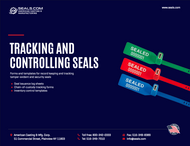
To help organizations manage this process, American Casting & Manufacturing (AC&M) offers a free guide with practical forms and templates for tracking seals. The guide explains simple procedures for managing seals from issuance through removal, helping organizations maintain clear records and reliable documentation. Below, we explore why seal tracking matters, where tamper-evident seals are commonly used, and how proper documentation strengthens security and accountability.
Organizations can also download AC&M’s free Guide to Tracking Seals, which includes customizable worksheets and templates for seal issue, installation, inspection, removal, and anomaly reporting.
Key Elements of an Effective Security Seal Tracking System
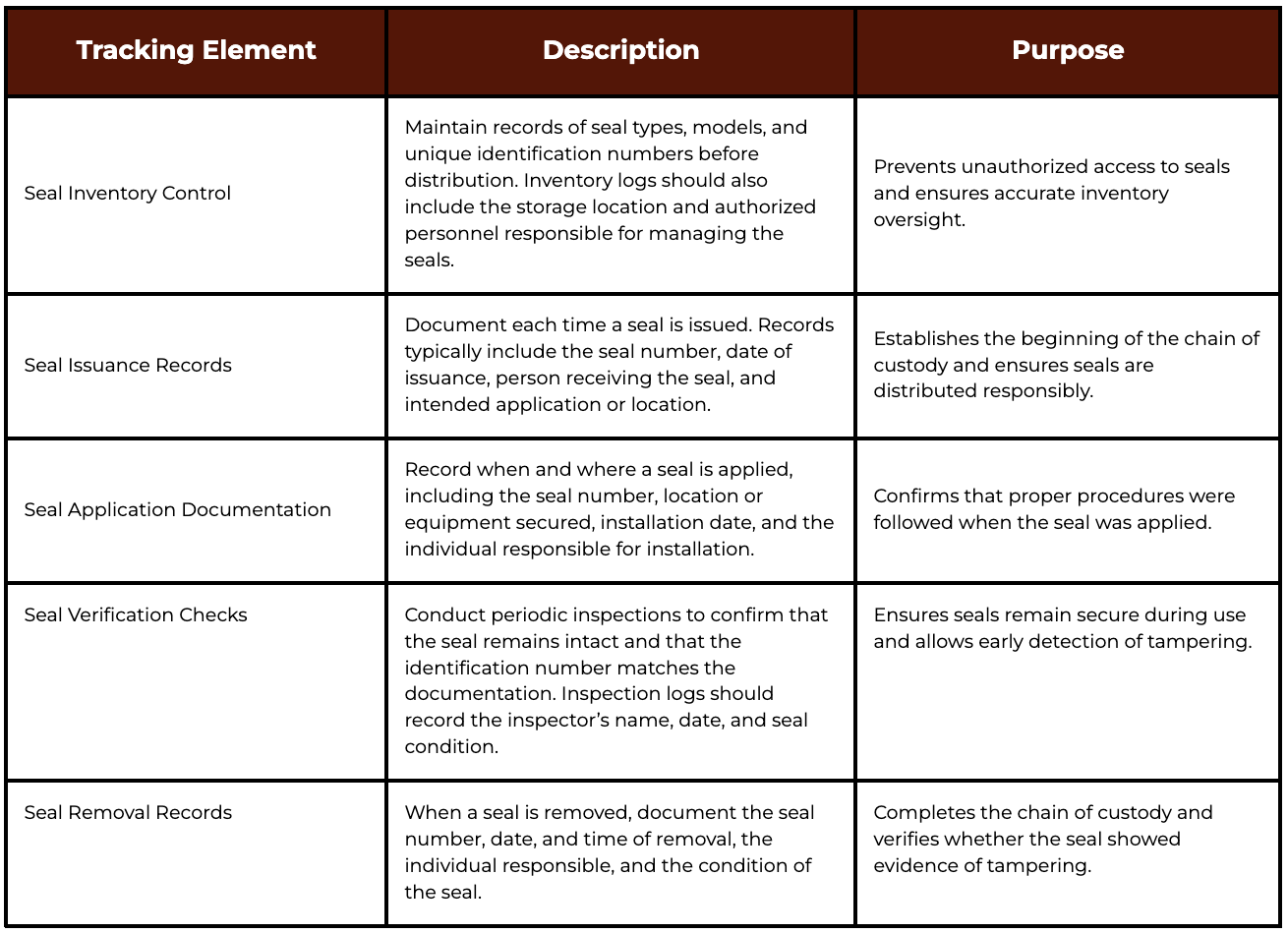
An effective security seal tracking system ensures that tamper-evident seals are monitored and documented throughout their entire lifecycle. Clear procedures help organizations maintain accountability, reduce security risks, and verify whether seals remained intact during use.
From the moment a seal is issued to the time it is removed, each step should be recorded to establish a reliable chain of custody. This documentation provides proof that security procedures were followed and that seals functioned as intended.
The table below outlines the core components of a structured security seal tracking program and the role each element plays in maintaining documentation integrity.
Many programs also use a seal anomaly or missing seal report for damaged, open, or missing seals so that issues can be escalated quickly to the appropriate custodian or auditor.
By implementing these structured steps, organizations can transform tamper evident seals into verifiable security controls rather than simple physical markers. A documented security seal tracking system strengthens accountability, supports compliance requirements, and ensures organizations maintain clear records that protect assets, operations, and personnel.
Common Applications for Security Seals
Security seals are used across many industries where asset protection, access control, and chain-of-custody verification are essential. When combined with proper security seal tracking procedures, tamper evident seals help organizations detect unauthorized access and maintain operational transparency.
Below are several common environments where security seals are widely used.
- Transportation and Logistics: Transportation systems use security seals to protect cargo during transit. Solutions such as plastic truck seals are commonly applied to truck trailers, rail freight containers, maritime shipping containers, tankers carrying liquid commodities, and airline cargo compartments. Tracking seals during transportation helps verify that shipments remain secure from origin to destination while maintaining a documented chain of custody.
- Utilities and Infrastructure: Utilities use seals to secure equipment and service meters from unauthorized access. Plastic security wire seals are commonly used for electric meters, gas meters, water systems, telecommunications infrastructure, and utility enclosures. Proper seal documentation allows organizations to detect tampering quickly while maintaining accurate service and inspection records.
- Warehousing and Distribution: Warehouses use tamper evident seals to secure inventory and restricted storage areas. They are often applied to storage cages, loading dock shipments, high-value goods containers, and internal transport units. Seal tracking improves operational accountability and supports loss prevention programs.
- Banking and Financial Systems: Financial institutions rely on seals to safeguard sensitive materials and controlled assets. Products such as plastic padlock seals are frequently used for cash containers, currency transport bags, ATM service panels, evidence bags, and secure document transport systems. Seal tracking helps maintain verifiable security records and supports regulatory compliance.
- Election and Voting Systems: Election systems use tamper-evident seals to protect ballots and voting equipment. Seals are commonly applied to ballot boxes, voting machines, transport containers, and evidence storage. Accurate seal tracking creates a documented chain of custody, supporting transparency and election integrity.
- Healthcare and Medical Facilities: Healthcare facilities use seals to protect medications, equipment, and sensitive materials. Tamper evident solutions can help secure laboratory samples, pharmaceutical containers, medical carts, and the transport of sterile equipment. Reliable documentation ensures patient safety and supports healthcare regulatory requirements.
Accurate seal tracking creates a documented chain of custody, supporting transparency and election integrity.
Across all these industries, seals are most effective when supported by consistent documentation and seal-tracking procedures that enable organizations to verify security and respond quickly to irregularities.
Benefits of Using Structured Seal Tracking Forms
Standardized seal tracking forms simplify documentation and help ensure consistency across operations. By implementing structured security seal documentation systems, organizations can maintain clearer records and strengthen overall security oversight.
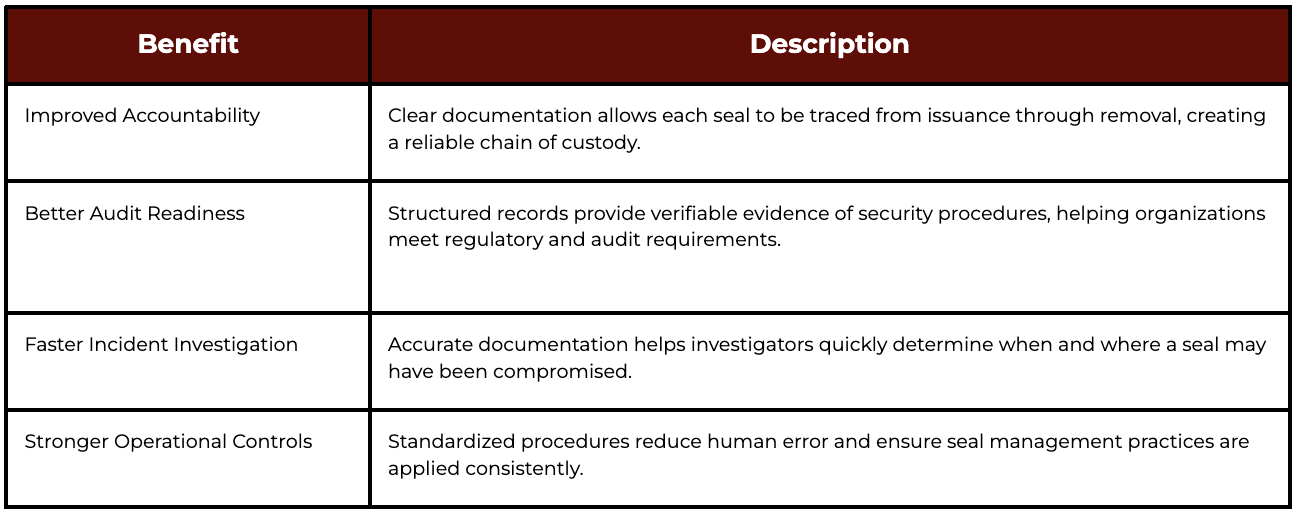
Using structured seal-tracking forms allows organizations to maintain greater control over their security processes. With clear records and consistent procedures, businesses can protect assets, strengthen accountability, and respond more effectively when irregularities occur.
Best Practices for Managing Tamper Evident Seals
In addition to proper documentation and tracking forms, organizations should follow operational best practices that strengthen seal security. These practices help ensure tamper evident seals function as reliable security controls rather than simple physical indicators.
- Use Uniquely Numbered Seals: Always use seals with unique identification numbers to ensure traceability. Many organizations also use barcoded seals to improve accuracy when recording and scanning seal numbers during inspections and tracking.
- Restrict Access to Seal Inventories: Seal inventories should only be accessible to authorized personnel to reduce misuse and maintain accurate records. High-security applications often manage devices such as bolt security seals under strict tracking procedures.
- Train Staff on Seal Procedures: Employees responsible for seal handling should be trained on proper application methods and documentation requirements. Training helps ensure seals are applied consistently and recorded correctly.
- Conduct Routine Seal Audits: Regular audits verify seal inventory accuracy and proper issuance. During inspections, organizations may check deployed devices, such as cable security seals, to confirm that seal numbers match the recorded documentation.
- Establish Incident Reporting Procedures: Organizations should implement clear procedures for reporting damaged, missing, or compromised seals. Prompt reporting helps ensure potential breaches are investigated quickly. Many programs use a dedicated seal anomaly or missing seal report form so that issues can be documented and escalated to the seal custodian or assigned responsible party.
Following these best practices strengthens the effectiveness of tamper evident seal programs and helps organizations maintain stronger operational accountability.
Supporting Security Operations with Trusted Expertise
For more than a century, organizations across industries have relied on American Casting & Manufacturing (AC&M) for tamper-evident and security-sealing solutions. With over 115 years of experience, AC&M has built a reputation as a trusted source for seal technology, operational guidance, and industry best practices.
Beyond providing high-quality seals, AC&M helps organizations implement the procedures and documentation systems necessary for effective security seal tracking. Companies seeking to strengthen their seal management processes can access AC&M’s free security seal tracking guide and documentation forms, or consult their team directly for tailored recommendations that support operational security and compliance.
To get started, download AC&M’s free Guide to Tracking Seals, which includes practical worksheets and templates for seal issuance, installation, inspection, removal, and anomaly reporting.